Hurrify
Team
Cindy Lin, Megan Le, Jennifer Lie
Impact
All-in-one web and mobile solution for hurricane preparation
As climate change increases the magnitude of disasters, the National Weather Service (NWS) is facing $1.7B in budget cuts, putting communities at greater risk than ever.
About
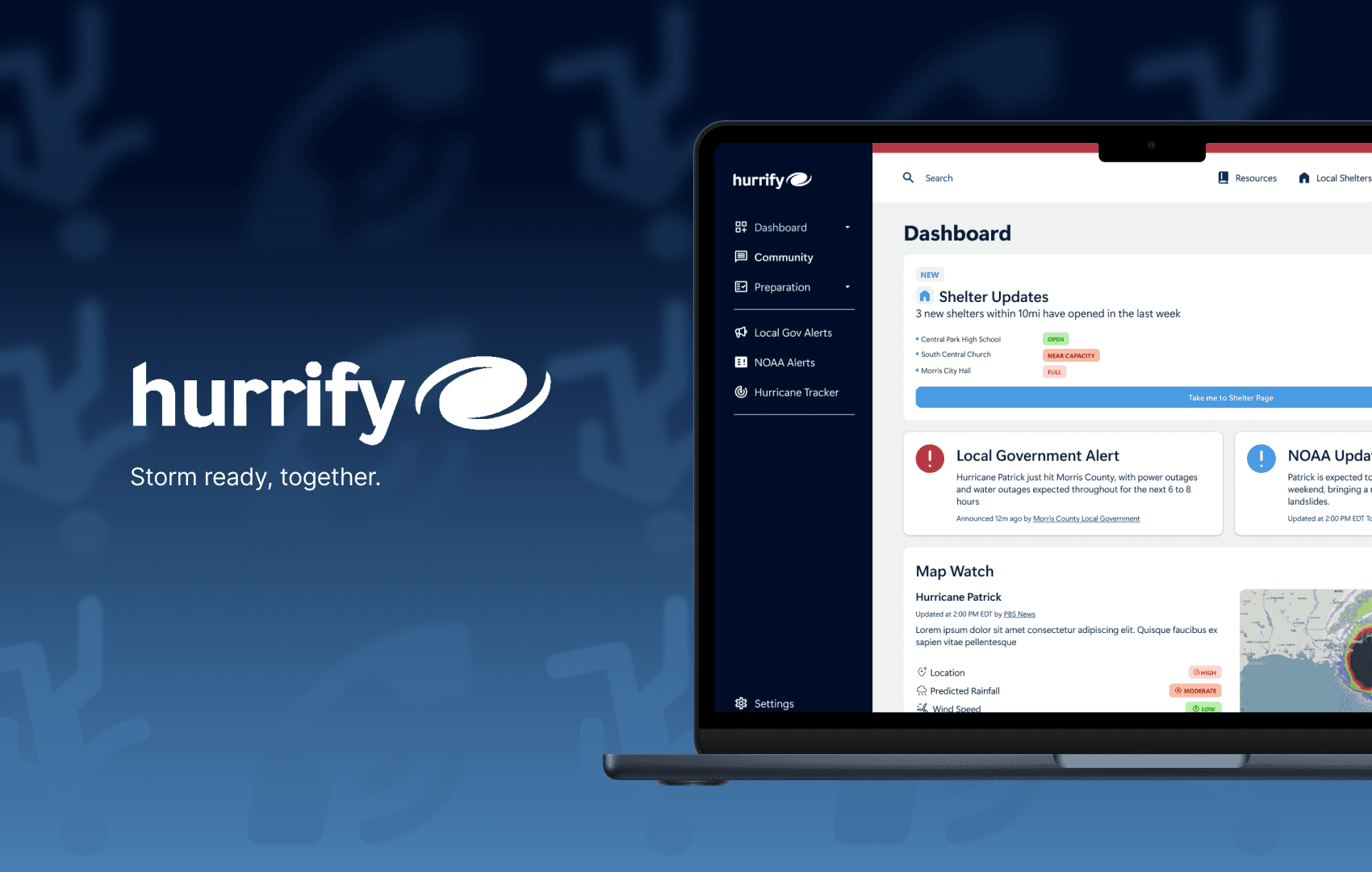
Hurrify addresses the gap in the market for effective hurricane disaster alert notifications for individuals and families in high-risk states
• Hurrify focuses on three main principles: building and gaining trust, shifting the disaster preparation mindset, and notifying users without overwhelming them
• The final solution includes a mobile app and website (designed by me), along with physical merchandise designed by Megan (magnets, stickers, and keychains), and a brochure designed by Jennifer to promote awareness and preparedness
Research Question
How can we streamline the process of disaster alert notification efficiently and effectively for individuals & families affected by hurricane disasters while taking into consideration various accessibility challenges?
Research & Process
We began by researching public sector gaps and defining disaster stakeholders. The scope focused on the overall FEMA application process, but was eventually the scope shifted towards disaster alert notification.
Conducting Interviews
Overall, we conducted interviews with 6 stakeholders, including a hurricane survivor and a hydrologic modeling expert. Key metrics from the interview are:
83% of interviewees reported a negative emotional reaction
50% lacked knowledge regarding the hurricane event
Major Takeaways:
In times of disaster, there is a significant…
Lack of trust in government. People instead prefer to rely on their local communities for help or aid.
An astounding loss of confidence in warning systems
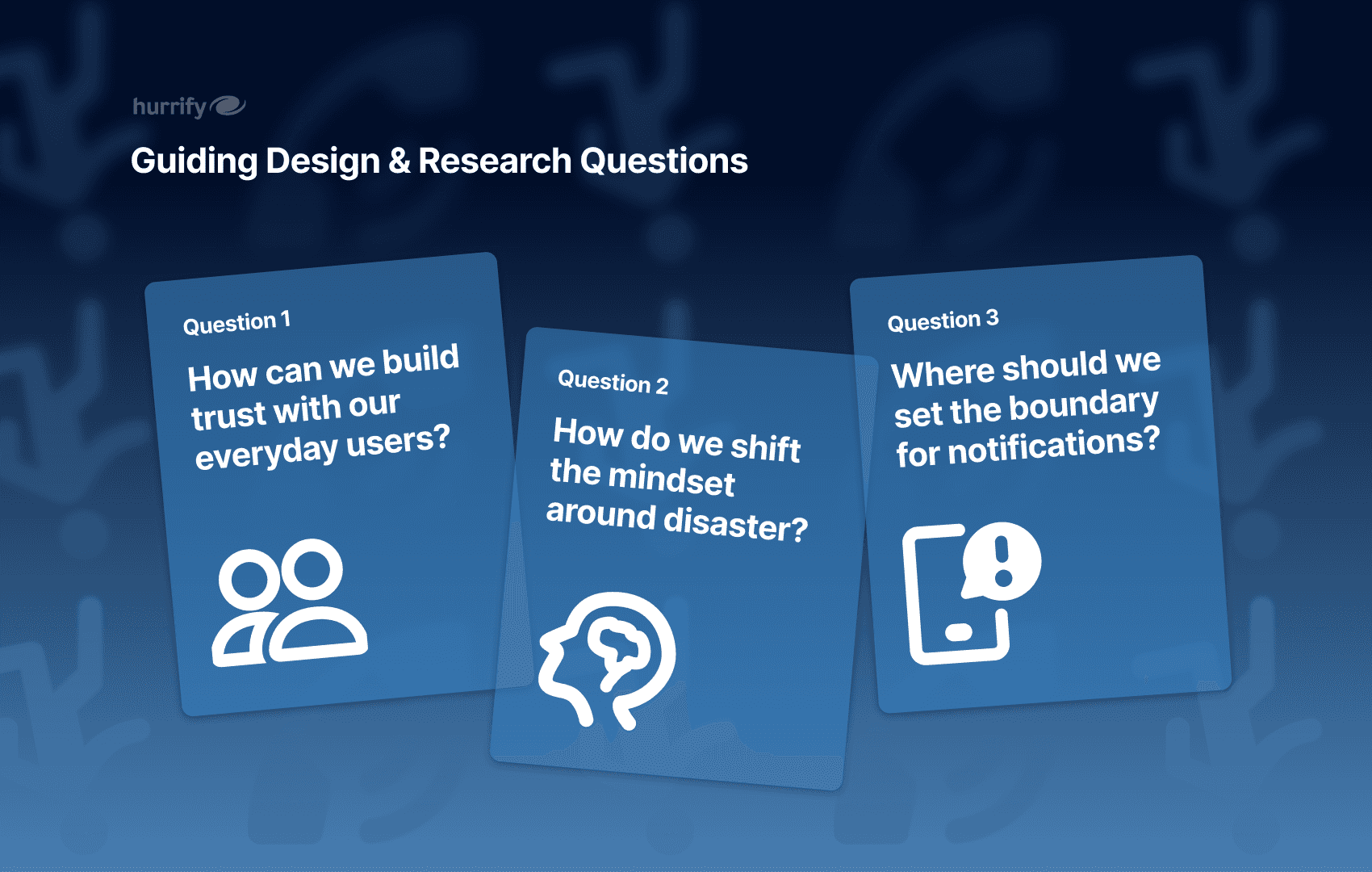
These takeways led us to form our 3 guiding questions for the rest of the project:

Grouping Interview Insights
Insights were grouped into categories covering pre, during, and post-disaster stages, along with behaviors, actions, current limitations/failures, potential opportunities, and emotions & reactions
Our Product Solution
Hurrify would act as a digital experience (website, mobile app for notification) AND a physical experience to meet users where they are, rather than force them to pick an option
Mapping User Experience of Hurrify
Mapped the user experience across five stages, differentiating processes based on whether the situation was a Non-Emergency or an Emergency:
Awareness
Consideration
Use
Implementation
Loyalty
The overall design anticipated Hurrify working extensively with local government and NGOs in both non-emergency (awareness/preparedness) and emergency (relief/support) scenarios
Illustrating Hypothetical Scenarios
Storyboarding was used as a visualization tool to illustrate how people would discover the solution and then use it for hurricane preparation and escape
Scenarios showed users receiving physical materials like pamphlets or scanning QR codes to access the app or website

04. Prototyping
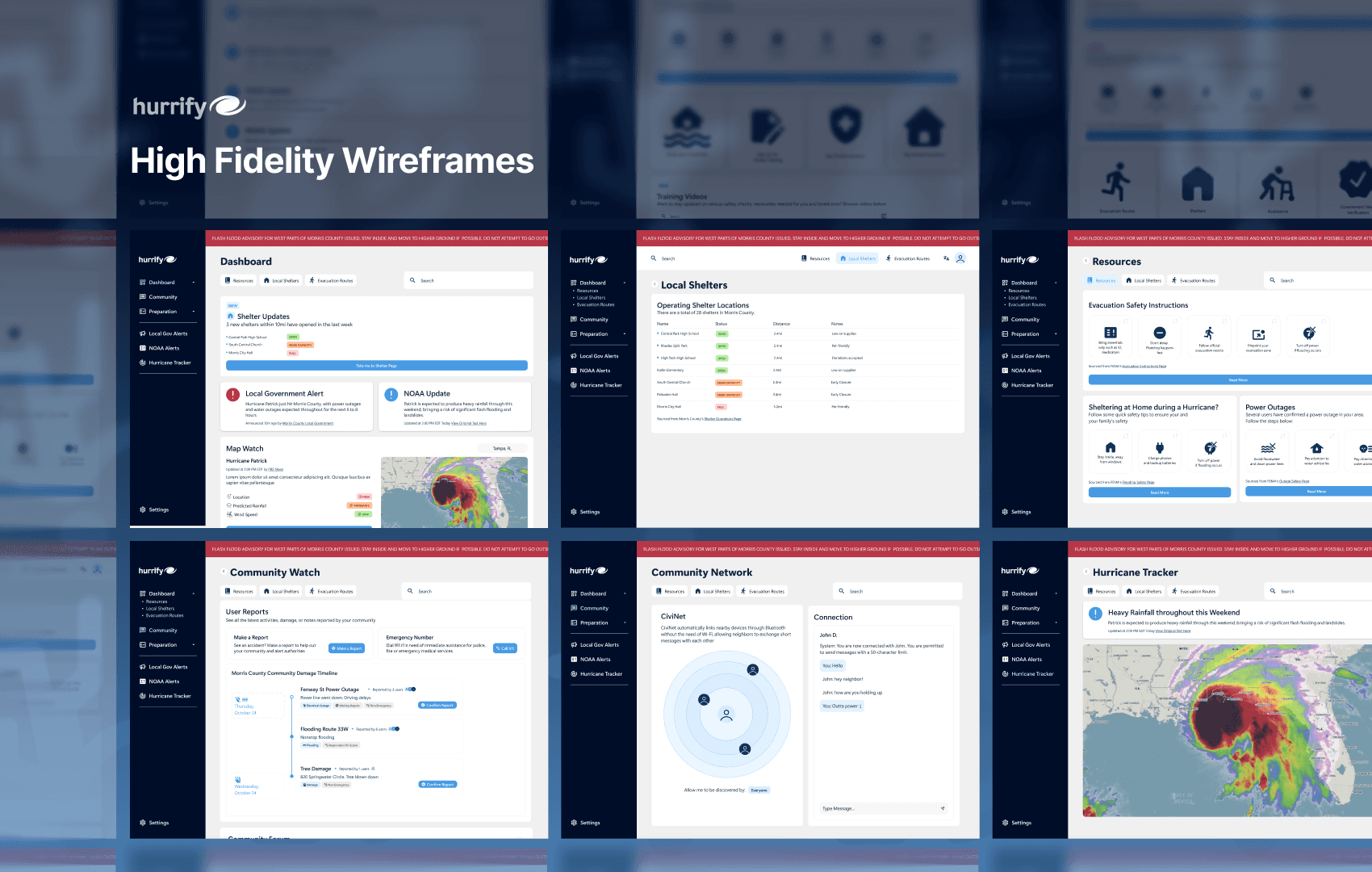
5 rounds of low to high-fidelity (Hi-Fi) prototyping were completed, making sure all prototypes were aligned and made sense to overall user experience
User Testing Insights: Scenario surveys confirmed that 100% of tested users relied on electronic devices for updates & ranked shelter locations and government updates as the most important information one week and one day before a disaster
Stakeholder feedback on mid-fidelity prototypes resulted in preference for Dashboard View One and larger buttons
Implemented transparency by providing sources and timestamps for alerts. Introduced "Community Confirmation" to involve users in verifying incidents like power outages. Shifted wording from generic alerts to contextual warnings (e.g., "Hurricane expected to hit in 2h, 50% chance power goes out")


Results
• The project successfully advanced toward the mission of building trust, shifting the way people view disasters, and defining effective disaster notification.
• It was recognized that addressing natural disaster alerts is not solely a technical challenge but requires inclusive design and a deep understanding of user trust.
• The core solution incorporates key trust-building features, such as sourcing information and the CiviNet peer-to-peer network for communication when conventional internet fails